
Blog
Tips, guides, and updates to help you get the most out of Google Tasks with TasksBoard.
Category
Productivity & Planning
Tips, techniques, and tools to plan your day and stay focused.
See all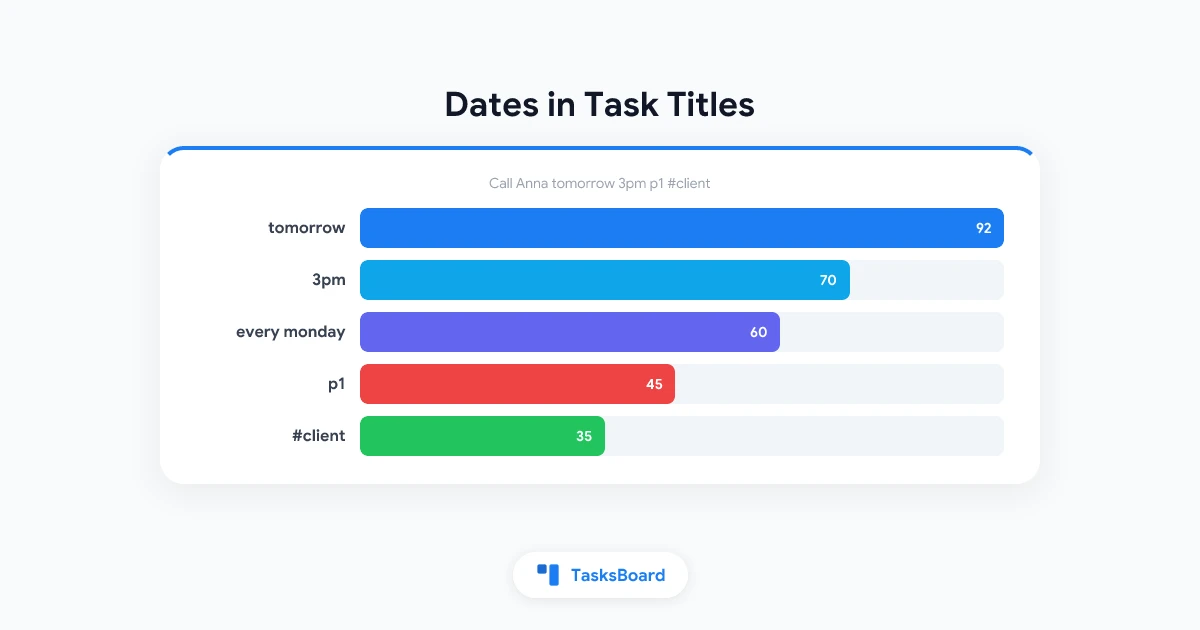
Google Tasks Natural Language Dates: Type 'Tomorrow 3pm' in the Title
Type dates, times, repeats, priorities and labels straight into a Google Tasks title in TasksBoard. The full quick add syntax and what gets written to the task.
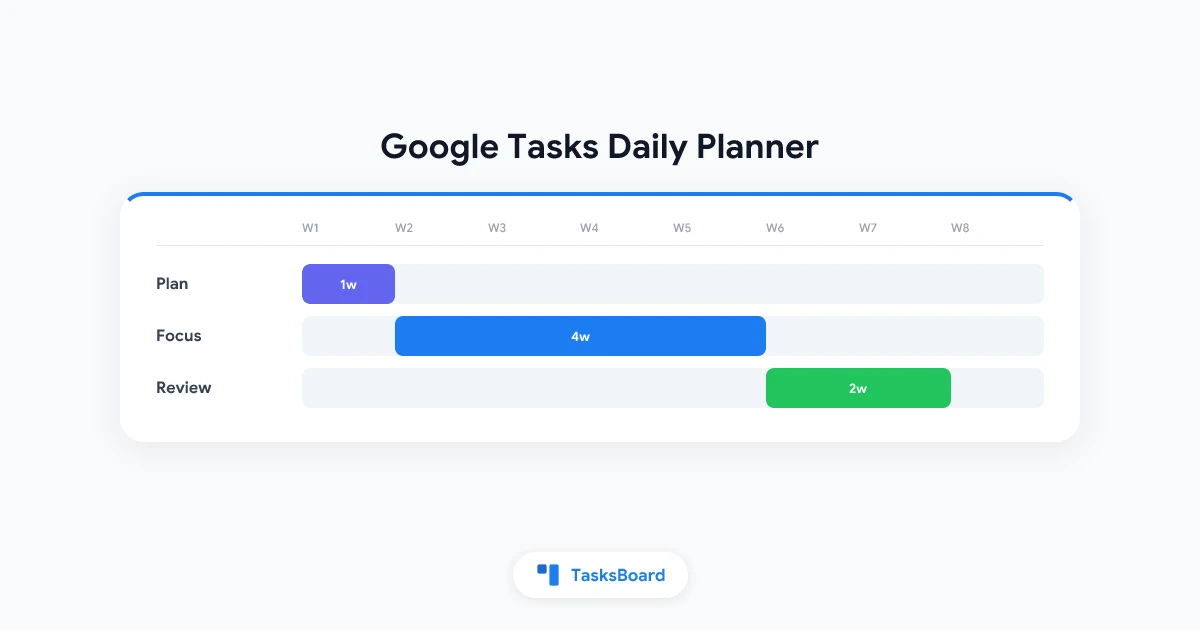
Google Tasks Daily Planner: Plan Your Day Step by Step
Turn Google Tasks into a daily planner with due dates, Calendar and a Today view. Follow a simple morning routine to plan, focus, and review every day.
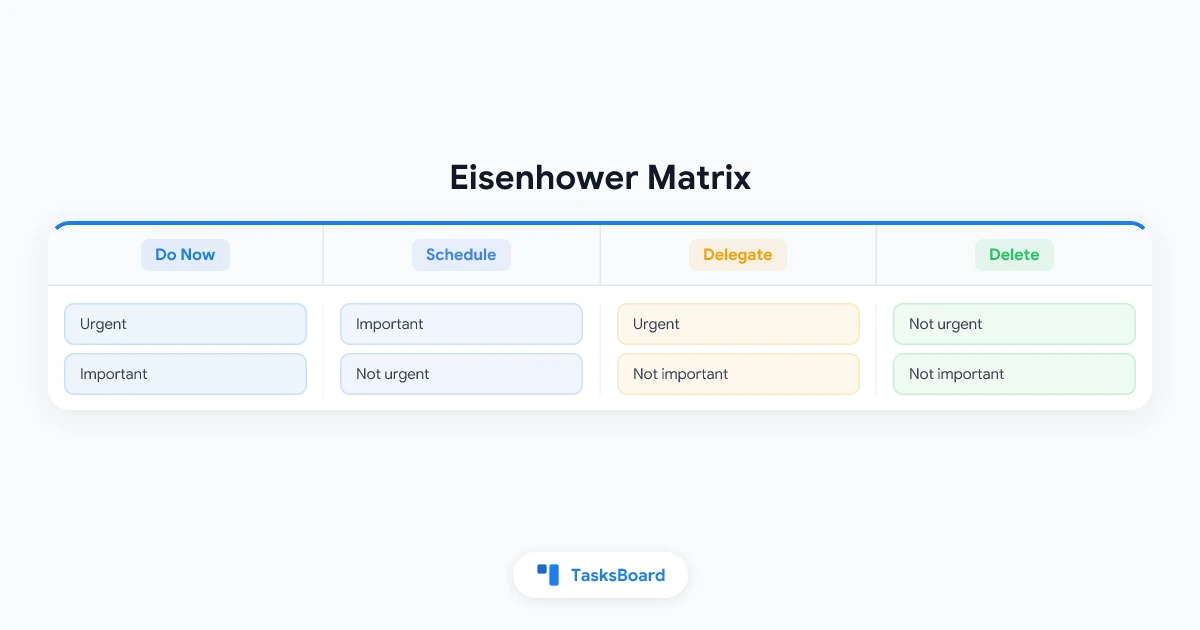
Eisenhower Matrix: How to Prioritize Tasks (Free Template + Google Tasks Guide)
Learn how the Eisenhower Matrix works, see a free template for the four quadrants, and find out how to build one with Google Tasks and TasksBoard.
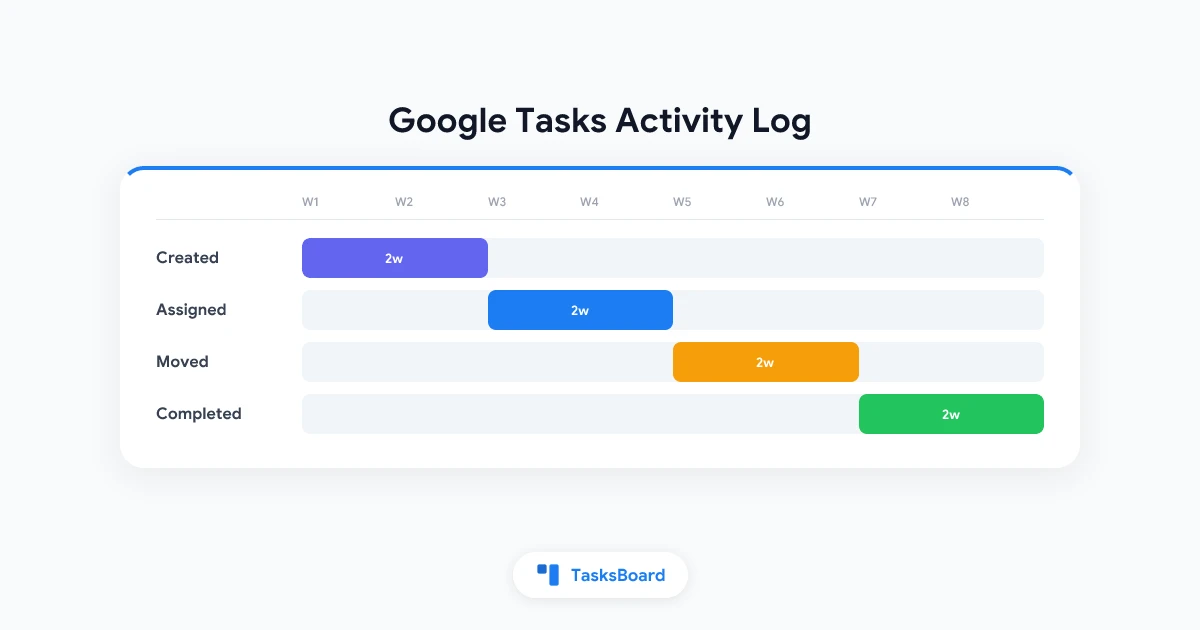
Google Tasks Activity Log: See Who Did What on a Shared List
Google Tasks keeps no record of who completed, assigned or moved a task. How to get an activity log, per-task history and a weekly summary on a shared list.
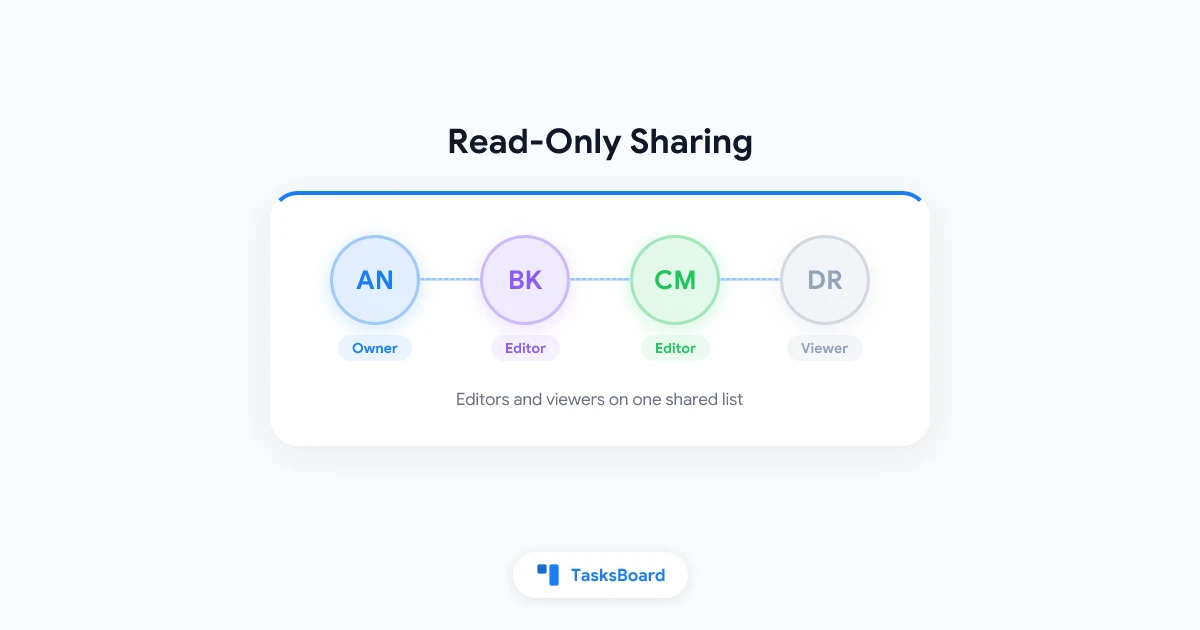
Google Tasks Read-Only Sharing: Give Someone View-Only Access to a List
Google Tasks has no permissions. Learn how to share a list as view-only with the Viewer role, filter a board by person, and send a link to one person's tasks.
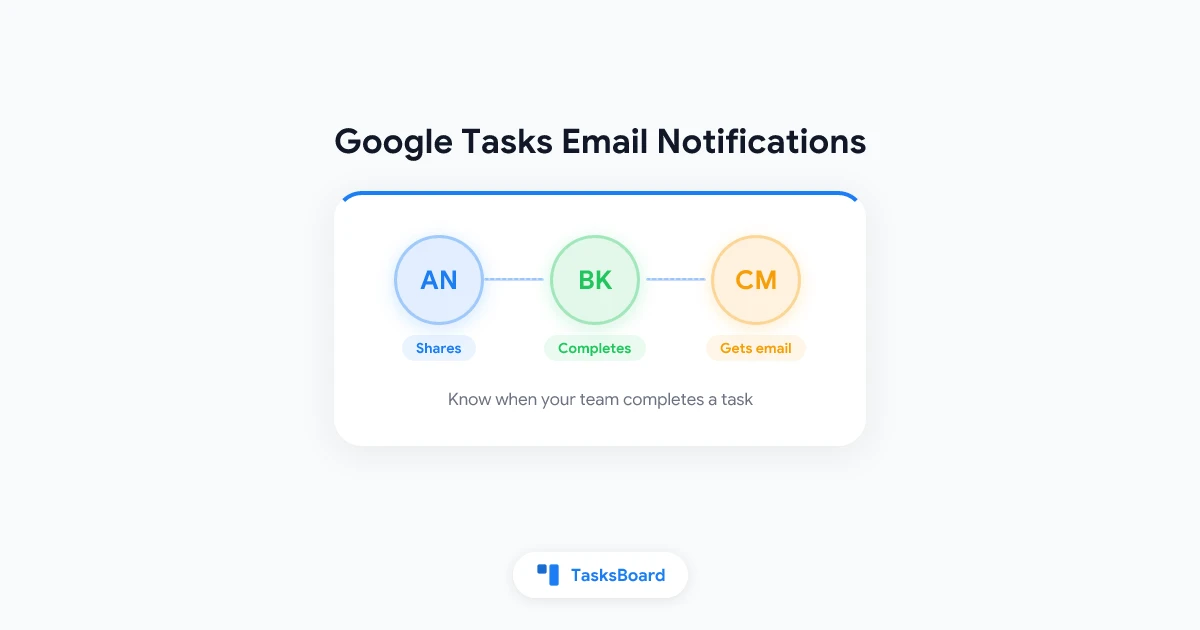
Google Tasks Email Notifications: Know When a Shared Task Is Completed
Get Google Tasks email notifications when a teammate completes a task in a shared list. Set up completion emails and team collaboration with TasksBoard.
Category
Project Management & Agile
Frameworks, methodologies, and strategies to ship projects on time.
See all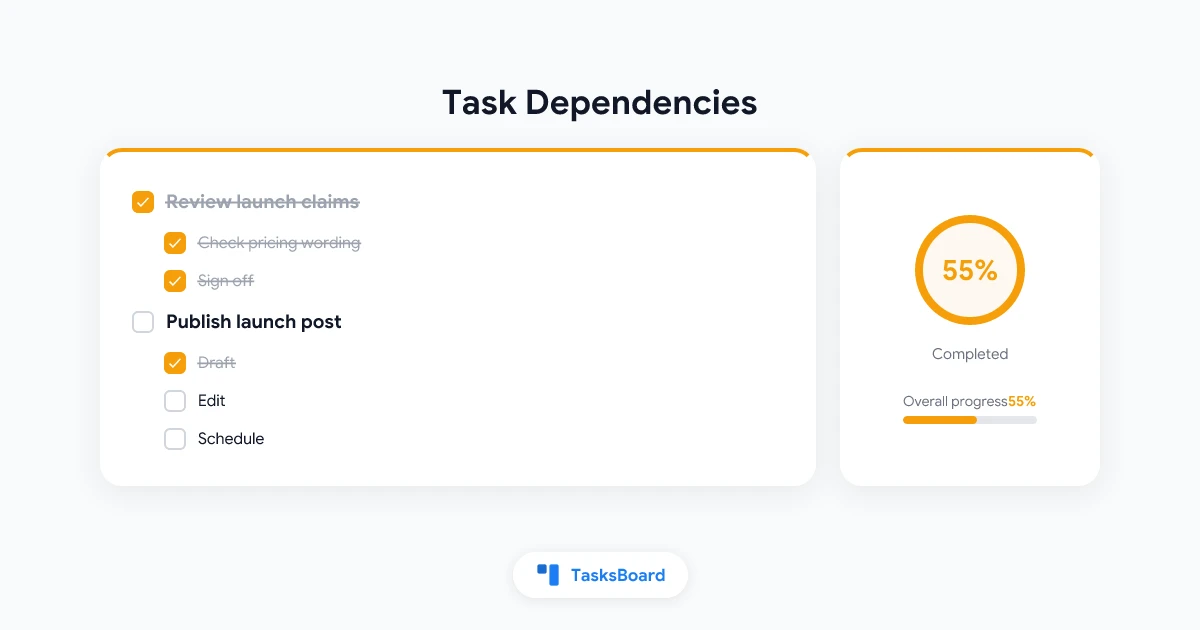
Google Tasks Dependencies: Mark a Task as Blocked by Another
Google Tasks has no dependencies. TasksBoard adds 'blocked by' links across lists, a lock icon, unblock notices and three levels of subtasks. How it works and syncs.
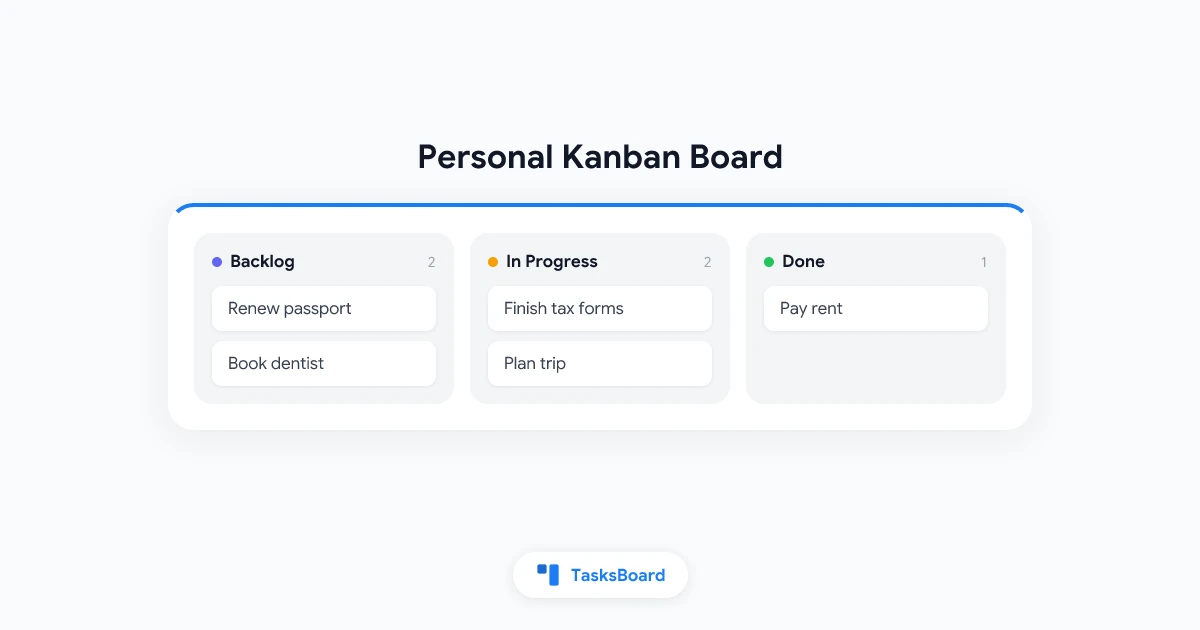
Personal Kanban Board: A Simple System to Organize Your Own Tasks
Learn how to build a personal kanban board that keeps your tasks visible and manageable. Step-by-step setup, WIP limits, and real examples inside.
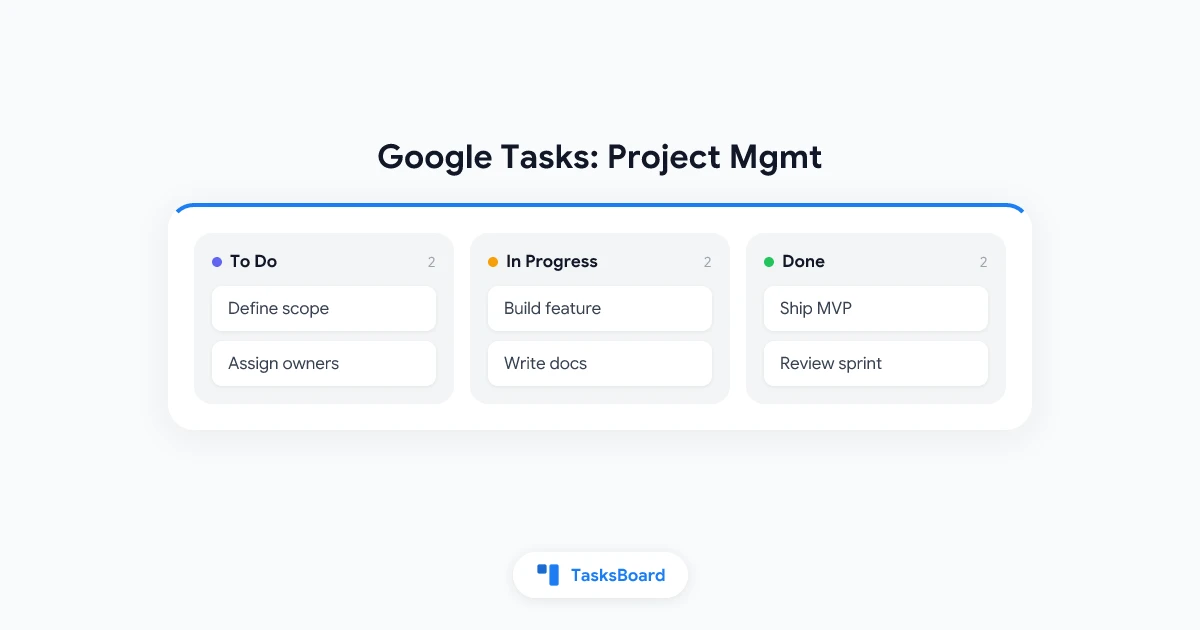
Google Tasks for Project Management: A Complete 2026 Guide
Learn how to use Google Tasks for project management. Set up lists, track milestones, and add kanban boards with TasksBoard to run real projects.
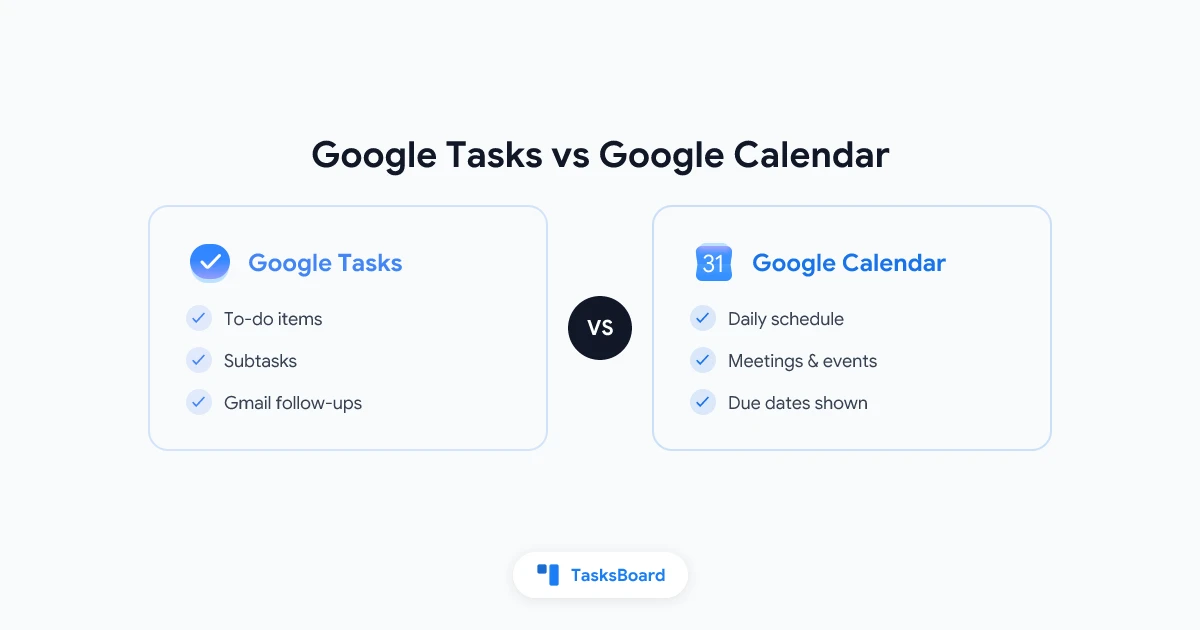
Google Tasks vs Google Calendar: Which Should Hold Your To-Do List in 2026?
Google Tasks vs Google Calendar compared: how the built-in Tasks list works, where due dates show up, and which one to trust for your daily to-dos.
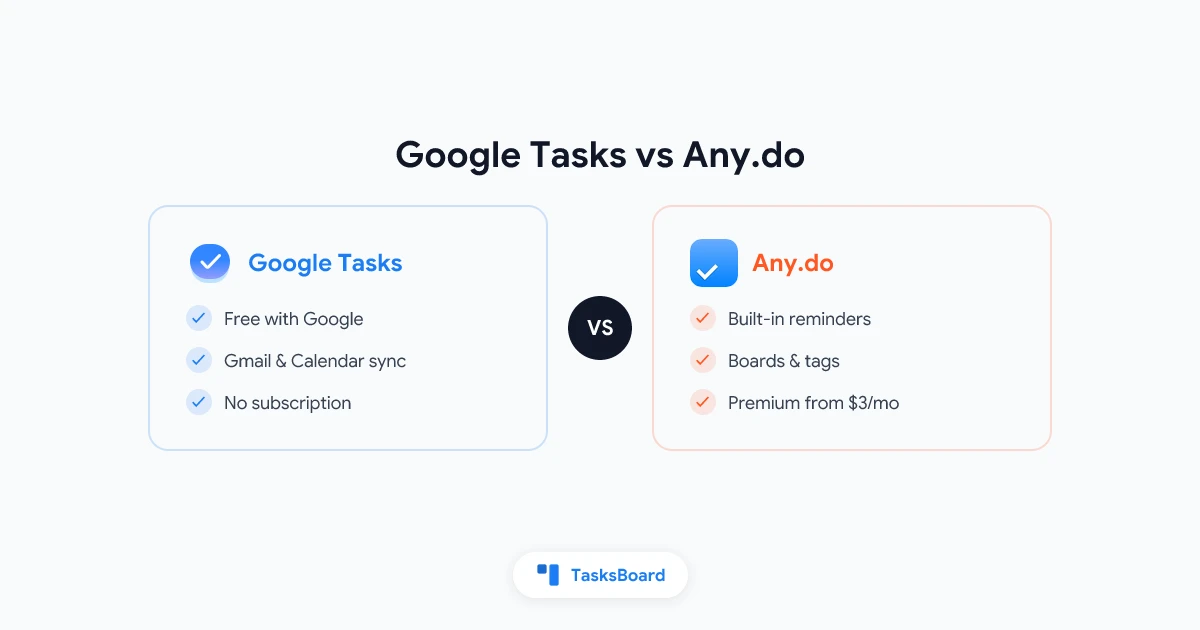
Google Tasks vs Any.do: Which To-Do App Should You Use in 2026?
Google Tasks vs Any.do compared on price, reminders, recurring tasks, and collaboration so you can pick the better to-do app for your workflow in 2026.
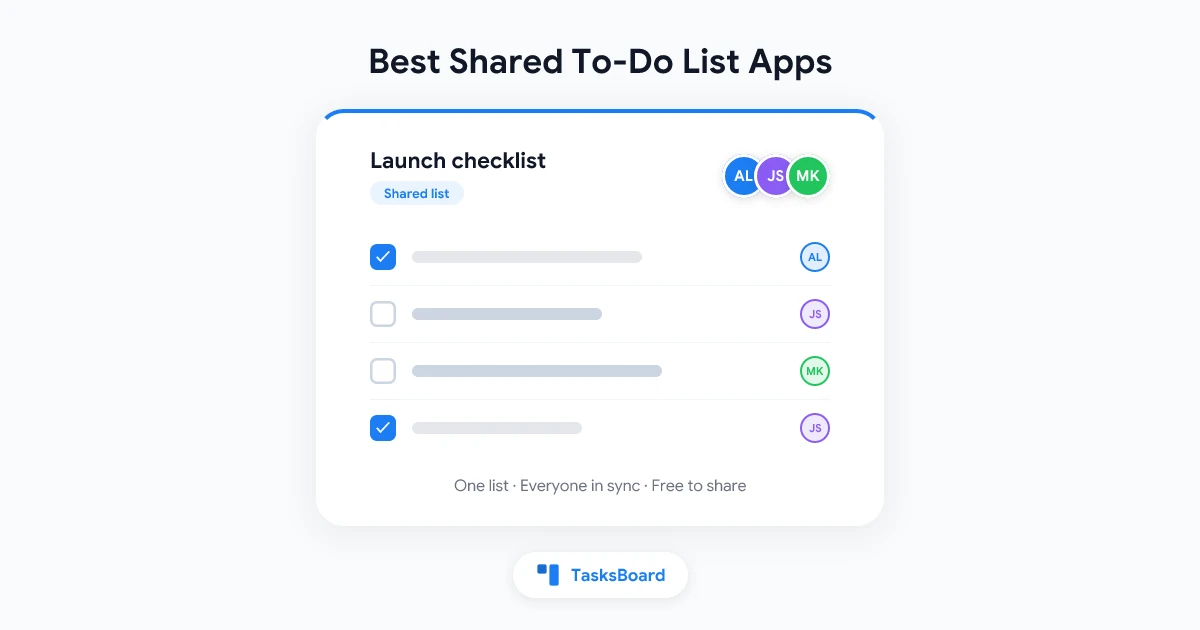
Shared To-Do List App: The 6 Best Options in 2026
Compare the 6 best shared to-do list apps of 2026. Real free plan sharing limits for TasksBoard, Todoist, Microsoft To Do, TickTick, Any.do, and Trello.
Category
AI & Future of Work
How artificial intelligence is reshaping how we work and collaborate.
See all
Turn an Email or Meeting Notes into Google Tasks with AI
Paste an email or meeting notes into TasksBoard and get Google Tasks with dates, priorities and subtasks. How it works, how to review the result, and the limits.
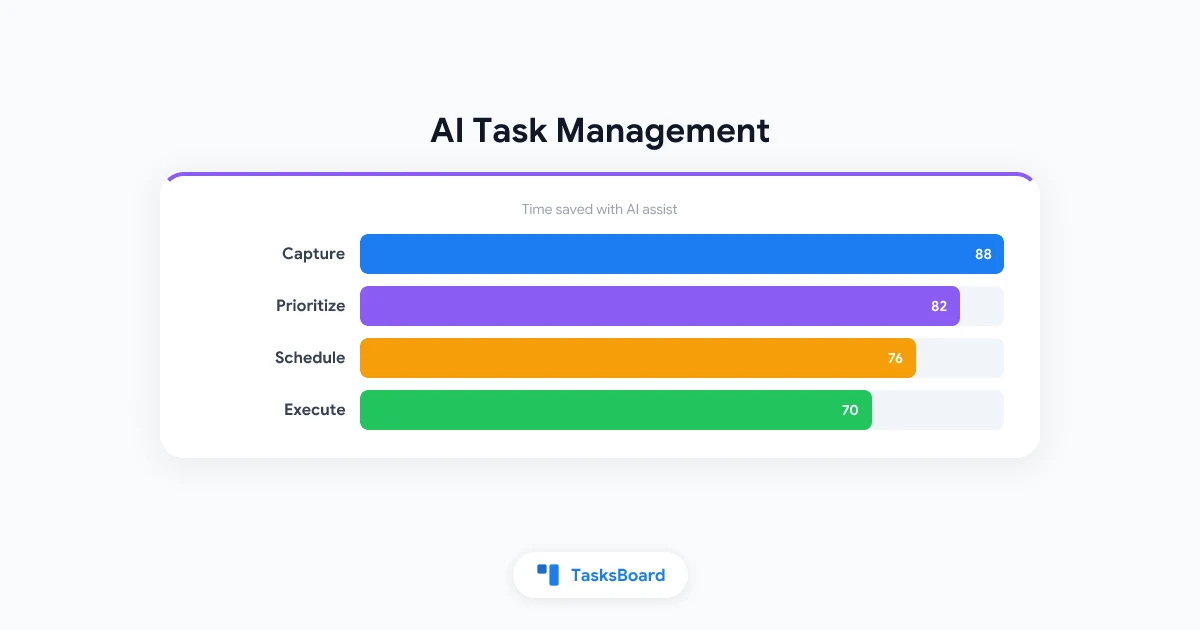
AI Task Management: How to Work Smarter with AI Tools in 2026
Discover how AI task management tools can prioritize your work, automate repetitive tasks, and help your team stay focused on what matters most in 2026.
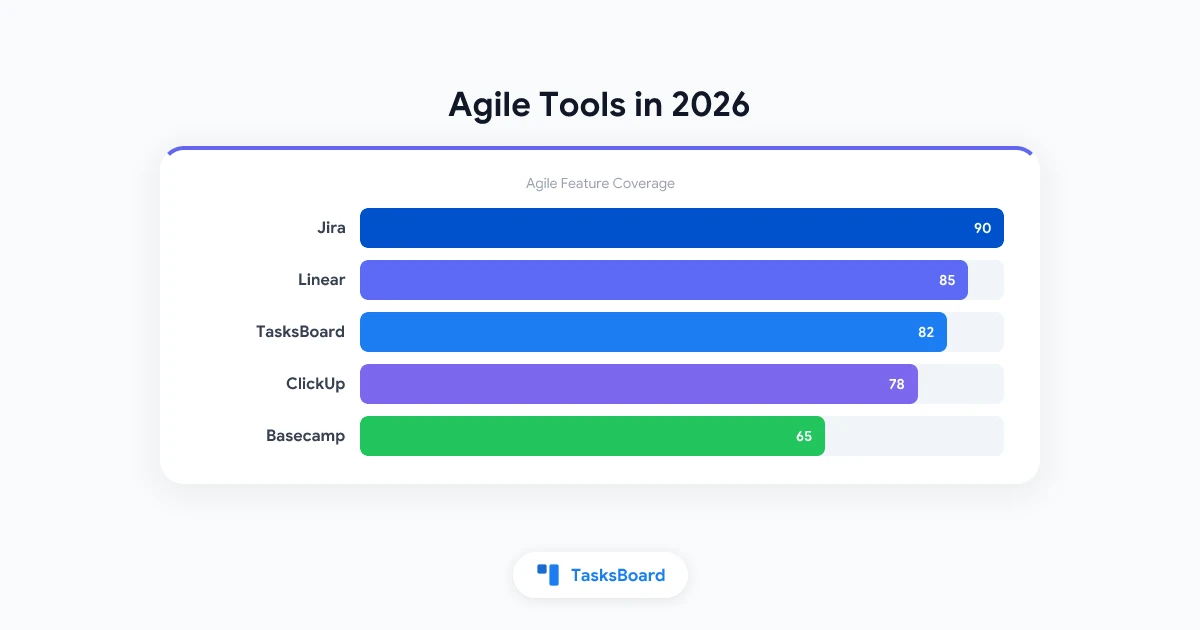
Best Agile Tools in 2026: Free and Open Source Options Compared
Compare the best agile tools in 2026 for sprint planning, backlog management, and team collaboration. Includes free and open source options for agile teams of all sizes.
Google Tasks Chrome Extension: Open Your Tasks in Any Tab
Google Tasks Chrome extension guide: install the TasksBoard side panel extension, pin it, use it in any tab, and compare the top Chrome Web Store options.
Google Tasks Attachments: How to Attach Drive Files to a Task
Google Tasks attachments explained: attach Google Drive files to a task in Calendar, the 25-file limit, Android steps, and how TasksBoard adds files and links.
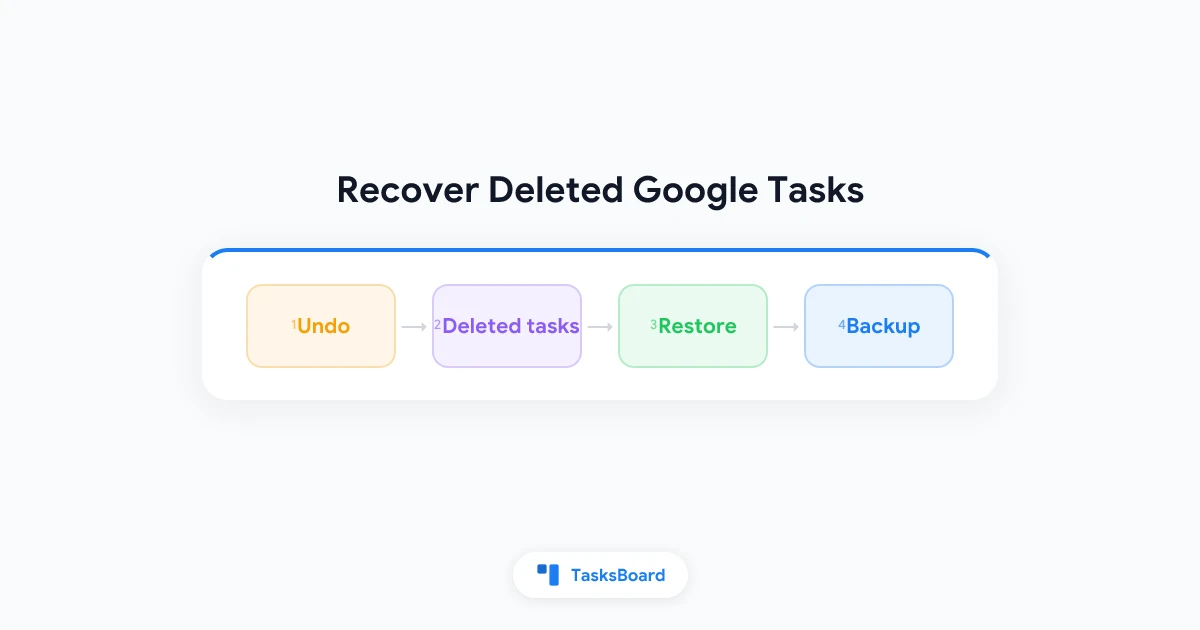
Recover Deleted Google Tasks: What Works and What Doesn't
Deleted a task by mistake? Learn how to recover deleted Google Tasks with undo and TasksBoard, what is gone for good, and how to back up your lists.